
What is DSEAR?
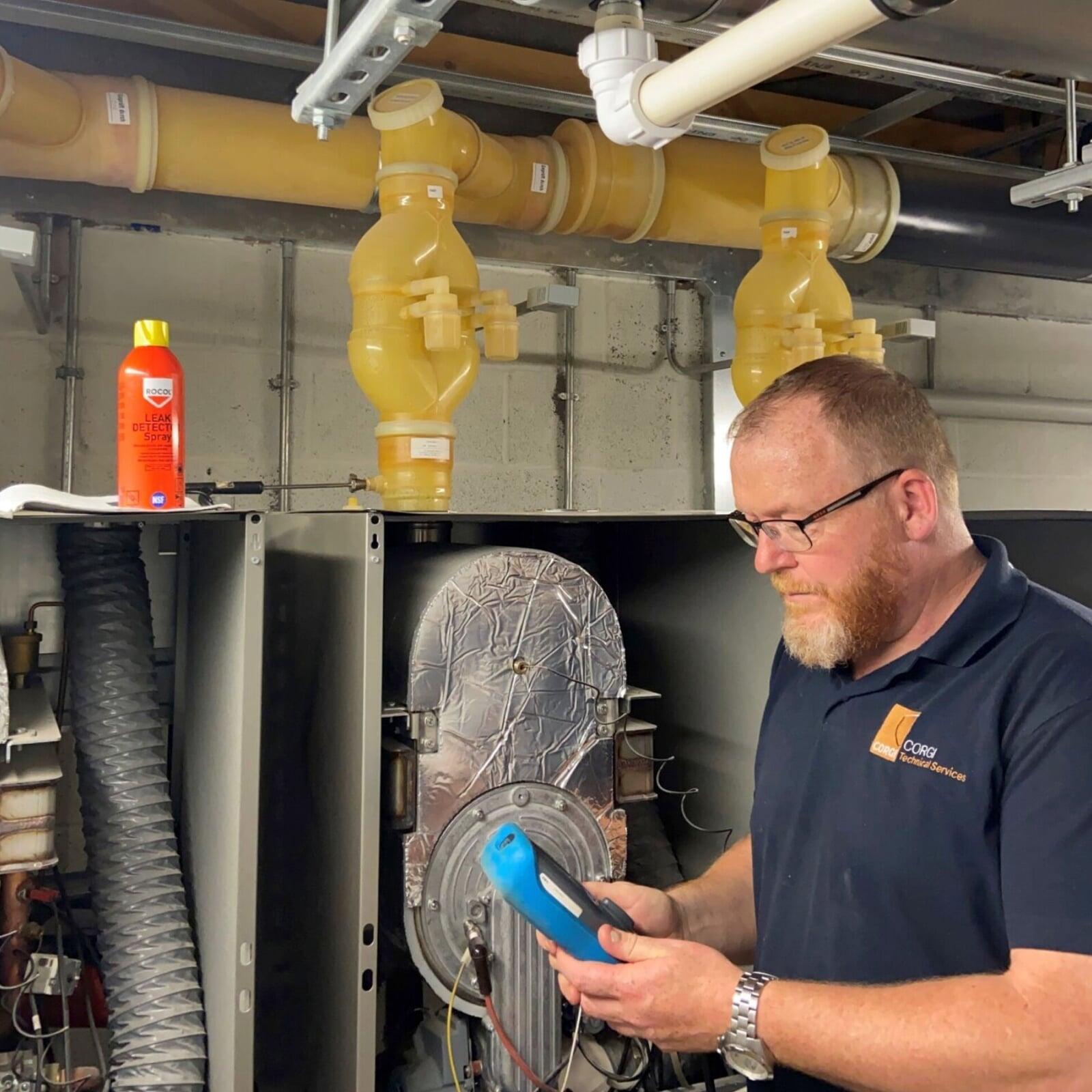
Why DSEAR matters in housing and public buildings
DSEAR applies wherever dangerous substances such as natural gas are present and work activities take place. In housing and public buildings, this commonly includes plant rooms, boiler houses, risers, meter cupboards and communal areas.
While residents are not employees, DSEAR duties extend to protecting anyone who may be affected by a fire or explosion, including contractors, staff, visitors and members of the public. This means duty holders must understand where hazardous atmospheres may form and how ignition risks are controlled.
The challenge for many organisations is not awareness of gas safety, but understanding how existing inspections, pipework assessments and maintenance activities fit together as a coherent DSEAR risk management system.
Common challenges we see

Confusion over scope
Many organisations are unsure whether DSEAR applies to residential buildings, particularly where gas systems serve domestic dwellings but pass through shared spaces.

Fragmented evidence
Pipework assessments, ventilation design, servicing records and contractor controls often exist in isolation rather than as a single DSEAR evidence set.

Limited leadership assurance
Boards and senior leaders struggle to get a clear answer to a simple question: are explosion and fire risks being managed so far as reasonably practicable?

No clear starting point or action plan
Even where risks are recognised, it is not always clear what to do first, which buildings to prioritise, or how to move from awareness to a proportionate, structured improvement plan.
DSEAR responsibilities can be addressed
proportionately and practically
If the challenges above feel familiar, you are not alone. Many organisations are already managing gas safety responsibly but struggle to understand how this translates into DSEAR compliance in real buildings.
The good news is that DSEAR does not require a one-size-fits-all solution. It requires informed judgement, proportionate assessment and clear evidence that risks have been considered and controlled so far as reasonably practicable.
With the right structure, DSEAR can be integrated into existing safety arrangements in a way that is logical, manageable and aligned with how your buildings actually operate.
Our approach to DSEAR compliance
CORGI’s approach is built around clarity, proportion and practicality. We focus on helping you understand what matters, where it matters, and what to do next.
Clarify where DSEAR applies
We start by helping you identify which parts of your estate fall within scope. This is based on how gas installations are configured, where pipework runs, how spaces are accessed, and who may be affected by a fire or explosion.
This removes uncertainty and avoids unnecessary assessment where risk is clearly low.
Assess risk using recognised methods
Where DSEAR does apply, gas pipework and associated installations are reviewed using established engineering methodologies, including IGEM UP 16 where appropriate.
This informs whether hazardous atmospheres may form, whether zoning is required, and what controls are necessary.
Turn insight into prioritised action
Findings are translated into a clear, proportionate action plan. This helps you decide what to address first, where to focus resource, and how to demonstrate progress over time.
The result is not just a report, but a practical framework you can explain to colleagues, senior leaders and regulators with confidence.
Talk to us about DSEAR compliance
Whether you are sense-checking existing arrangements, planning assessments, or looking for support in building a proportionate action plan, our technical team is here to help.
Contact us now for more information or to arrange a no-obligation meeting.